What does responsibility mean at Ruukin Kehräämö?
Sustainability is a widely used concept with a very broad meaning. At Ruukin Kehräämö, sustainability does not mean a single certificate or a claim that a material or product is perfect in its environmental impact. Sustainability is built from numerous small and large choices throughout the entire life cycle of a product. Corporate responsibility can be examined through three interrelated dimensions: environmental responsibility, social responsibility, and economic and administrative responsibility.
Environmental responsibility means for us the thoughtful use of natural resources and taking into account the environmental impacts of products throughout their entire life cycle. Beyond the origin and manufacturing of the material, it matters how much the product is used, how long it lasts, and whether it can be maintained, repaired, and eventually utilized as material for a new product.
Social responsibility extends to the people in the supply chain and their working conditions. In an international supply chain, it is essential to know our partners, maintain long-term relationships, and strive to gain information about the conditions under which materials and products are manufactured. For us, social responsibility also includes the well-being of our own staff and customers, as well as product safety.
Economic and administrative responsibility means building business on a sustainable foundation and employing open and responsible operating practices. A small company must be economically viable in order to take care of its employees, partners, and the continuity of its operations. Good governance also includes compliance with legislation, transparency, and ensuring that the claims we make about our products and our sustainability are based on the most reliable information possible.
These three dimensions of sustainability are not separate from each other. A long-lasting product can save natural resources, but at the same time, its manufacturing must take place under proper working conditions and the product must be economically feasible to produce. Sustainability is born from the whole.
Starting with precious natural fiber
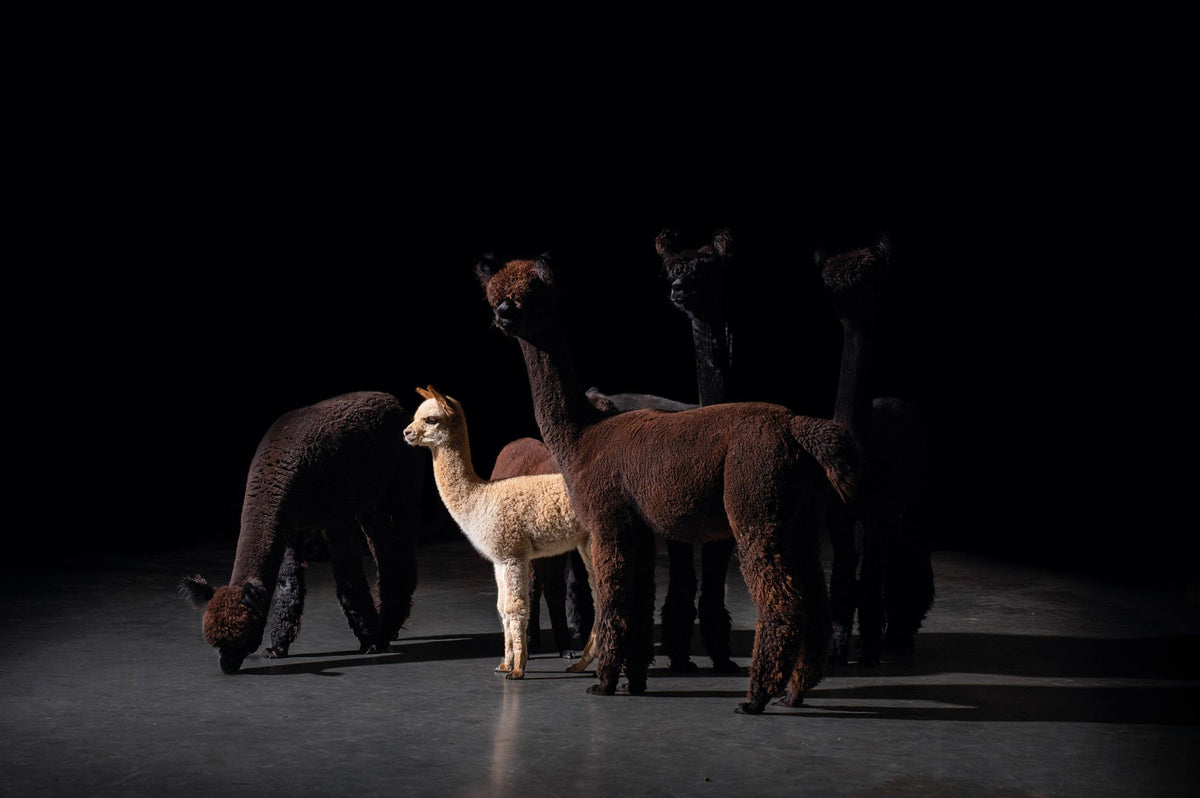
Our environmental responsibility begins with material choices. Alpaca fiber is a renewable natural fiber, and the alpaca fiber we use comes from Peru. Alpacas are raised there mainly on the high pastures of the Andes, characterized by demanding climatic conditions and limited opportunities for other agricultural production. Alpacas have adapted to these rugged mountain conditions and utilize the area's natural vegetation (Kern et al., 2026). Instead of hooves, alpacas have soft pads, which is why their movement puts relatively little strain on the pasture surface. When grazing, alpacas eat vegetation without pulling plants out by the roots, which helps preserve the area's vegetation (Pilarczyk et al., 2025).
Even natural fiber has environmental impacts. Animal rearing, fiber processing, dyeing, yarn production, knitting, and transportation all consume natural resources and cause environmental impacts. In the life cycle assessment of an alpaca garment, environmental impacts are generated at various stages of the supply chain, from alpaca rearing to fiber processing and the manufacture of the finished garment (Kern et al., 2026). Therefore, for us, sustainability does not mean declaring a single material as one hundred percent ecological, but rather examining its effects as part of the entire product life cycle.

Less processing, more of the material's genuine qualities
The majority of Ruukin Kehräämö's alpaca products are made from exceptionally fine and precious Royal alpaca fiber. We favor the alpaca's natural shades, and the fiber is dyed only when the desired shade is not available in an undyed state. Royal alpaca is naturally very fine and soft, so it does not need chemical treatments to enhance softness.
The fat content of raw alpaca fiber is low and the washing yield is high. A high washing yield means that a relatively large proportion of the raw fiber remains as usable fiber after washing. Due to the lower amount of fat and other impurities, less detergent can be used in washing alpaca fiber than in washing greasy sheep's wool. This also helps reduce the burden on wash wastewater. (Wang et al., 2003.)
Responsibility extends to the people in the supply chain
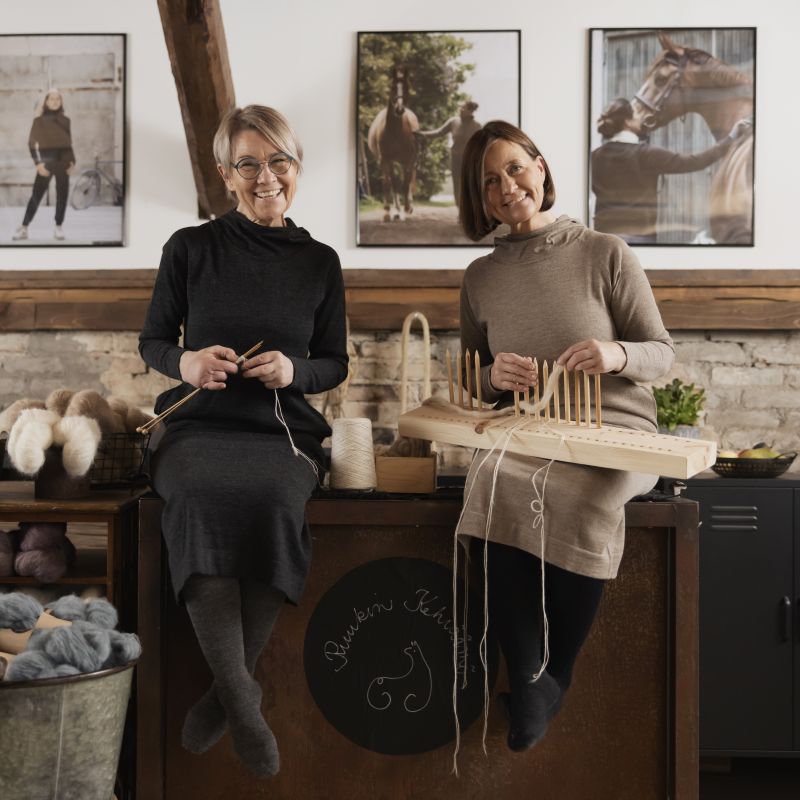
Ruukin Kehräämö products are designed in Finland, in Mathildedal, by our own team. Alpaca yarns are produced in Peru, and the knitwear is manufactured in Finland and Lithuania. We do not consider the shortest possible geographical distance an intrinsic value if the special expertise required for the product is not available closer. For us, responsible manufacturing also includes choosing the right expertise and striving for quality that supports the long service life of the product. In an international supply chain, social responsibility requires cooperation and transparency. We strive to know our suppliers and manufacturers and to regularly update our information on, for example, working conditions, employment contracts, and practices related to the environmental impacts of production.
From the Royal-quality alpaca yarn we use, alpaca farmers living in the rugged mountain regions of Peru receive a significantly higher price than for coarser-quality alpaca fiber. The alpaca yarns we use have the Fair Trade Peru Good Practices certificate. The goal of the certification program created by PromPerú is to promote, among other things, transparency, good working conditions, fair trade practices, non-discrimination, and environmental responsibility in the Peruvian textile and clothing industry. The alpaca yarns we use in our products are also OEKO-TEX® STANDARD 100 certified. This is a certificate concerning the product safety of textiles, in which the certified textile product is tested for harmful substances.

Photo: International Alpaca Association, www.aia.org.pe
A responsible garment is designed to be used
The sustainability of the material alone does not determine the sustainability of a garment. It is also essential how long and how much the finished product is used.
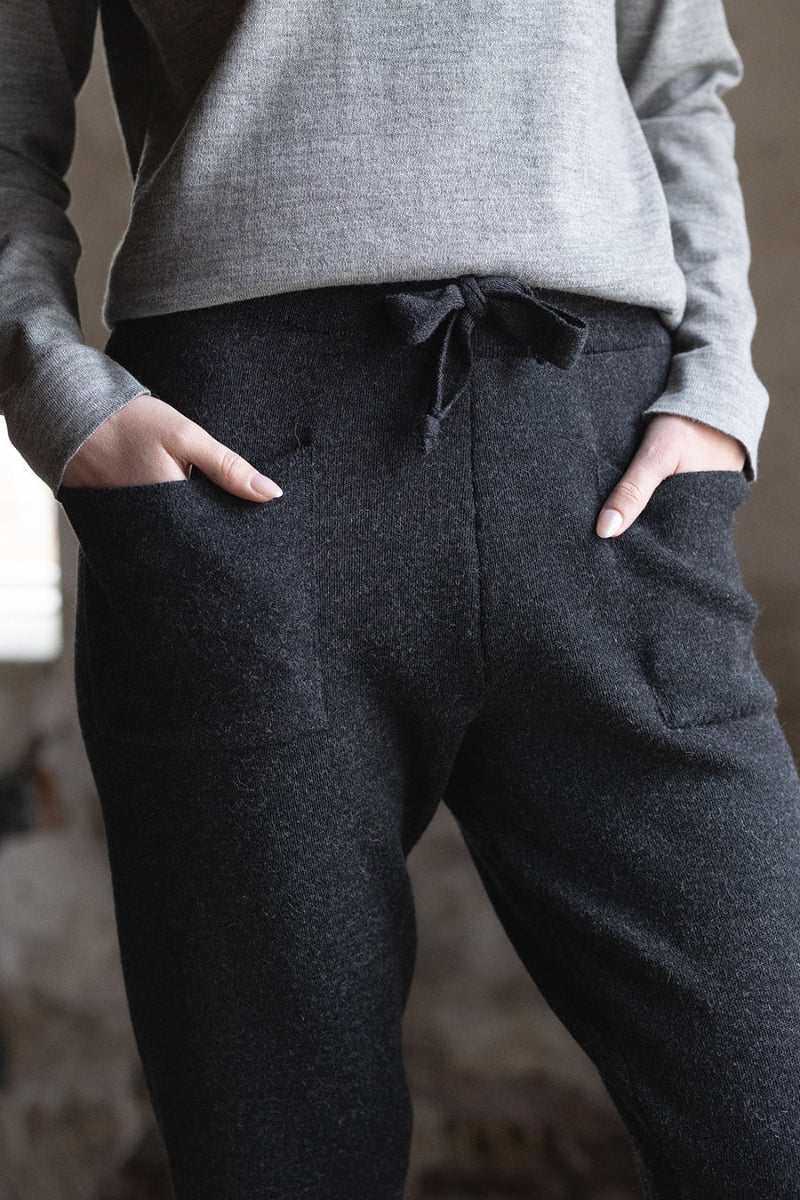
We do not design seasonal collections that change every few months. The Ruukin Kehräämö Alpaca Royal knitwear collection consists of classic garments, and the collection is supplemented thoughtfully. The starting points for design are timelessness, versatility, ease of care, repairability, and long service life.
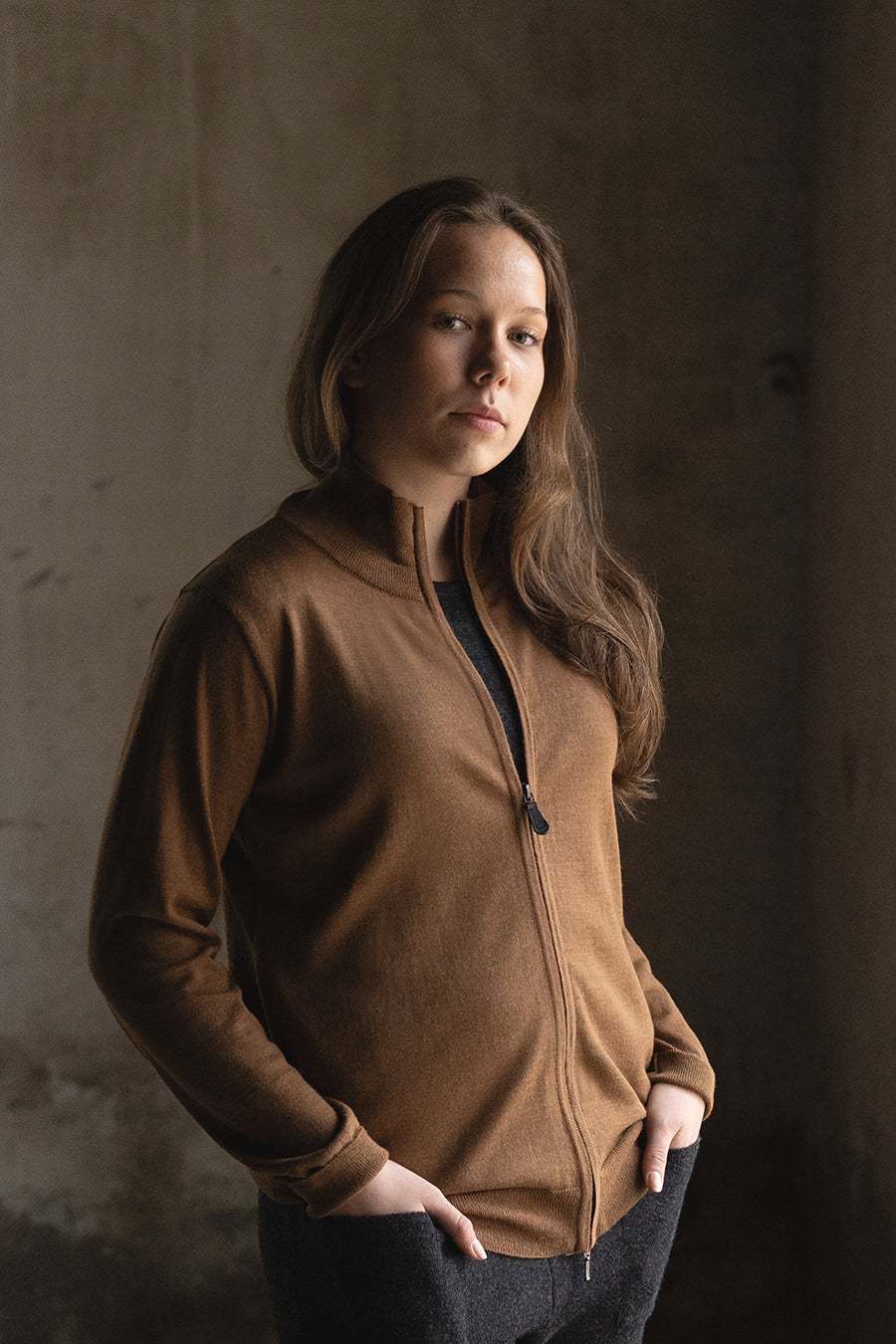
Our color palette is also based on this idea. The earthy color palette of our products is inspired by nature and the alpaca's natural shades. Timeless shades and simplified designs are not tied to a single season or rapidly changing trends. We want to design garments that stand the test of time both in terms of their material and style.
We do not base our sales on discount campaigns. We want to encourage thoughtful purchasing decisions: to buy when there is a need for a product, and to choose a garment that one wants to use for a long time and that lasts for years.
An economically sustainable company is able to bear responsibility
Responsible business cannot be detached from economic responsibility. A company must be profitable and viable in order to employ, pay appropriately for products and labor, develop its operations, and build long-term relationships with its suppliers and manufacturers.
This also means making thoughtful choices. It is not sensible to produce more products than there is demand for, nor do we want to use precious material for products that do not have the potential for long-term use. We strive to build our collection over the long term and by listening to our customers' wishes.
Economic responsibility and environmental responsibility meet naturally here: when a product is designed to be long-lasting and production is based on careful consideration, both material and financial resources are used wisely.
Transparency is part of good governance
Administrative responsibility is reflected in how the company is led and how its operations are communicated. We openly share the materials and countries of manufacture of our products in our online store and in customer interactions. We update our information from our suppliers and monitor changes in our supply chain. Certificates are one way to get independent verification of different aspects of the supply chain, but they alone do not make a product or company sustainable.
Transparency also means not having to present a perfect image of sustainability. All impacts of the supply chain cannot always be measured or known exactly. In those cases, it is more responsible to share what we know, what we do not yet know, and what we are striving to find out better.

Wear, air, maintain, and repair
Our responsibility for the product does not end the moment it leaves us for the customer. That is when the longest phase of the product's life cycle begins: use.
A high-quality alpaca knit does not need to be washed after every use. Often airing, steaming, or gentle brushing is enough. We provide guidance on the care of our alpaca products on our website and whenever asked. Fewer washes reduce the amount of water and energy needed for washing as well as the mechanical stress on the knit.
When a garment needs repair, it does not need to be replaced with a new one first. We have our own repair service, the purpose of which is to extend the service life of our products. The repair service has been granted the Key Flag Symbol, which indicates Finnish work. When a product is finally so worn that it is no longer worth repairing, we accept it in our recycling service. Our goal is to keep the precious alpaca fiber in circulation for as long as possible.
Sustainability is never finished
For us, sustainability is not a state to be achieved, but continuous development. Environmental responsibility requires consideration of natural resources and the entire product life cycle. Social responsibility requires knowing and developing the people and working conditions in the supply chain. Economic and administrative responsibility, in turn, create the foundation for us to do this work in the long term, transparently, and credibly.
A responsible product is not born from a single material, certificate, or country of manufacture. It is born from many thoughtful choices – and above all, from the fact that a high-quality product finds its user, remains in use for a long time, is maintained and repaired, and the value of the material it contains is preserved for as long as possible.
For us, luxury and sustainability are not opposites. On the contrary, at their best, precious material, careful design, and long service life make a product a trusted friend that one does not want to replace with a new one. We believe this is the strongest form of sustainability and the most genuine luxury in everyday life.
Sources:
Kern, T., Wurzinger, M., Gutierrez, G., Zollitsch, W., & Kral, I. (2026). Environmental life cycle assessment (LCA) of a Peruvian alpaca sweater with a focus on improvement pathways for the alpaca farm phase. The International Journal of Life Cycle Assessment, 31, Article 157. https://doi.org/10.1007/s11367-026-02730-0
Pilarczyk, R., Bąkowska, M., Pilarczyk, B., Tomza-Marciniak, A., Seremak, B., Udała, J., Matusevičius, P., & Mišeikienė, R. (2025). Alpaca (Vicugna pacos) husbandry and their welfare. Animals, 15(21), Article 3092. https://doi.org/10.3390/ani15213092
Wang, X., Wang, L., & Liu, X. (2003). The quality and processing performance of alpaca fibres (RIRDC Publication No. 03/128). Rural Industries Research and Development Corporation. https://agrifutures.com.au/wp-content/uploads/publications/03-128.pdf